
16th International Conference on Computational Heat and Mass Transfer (ICCHMT 2027)
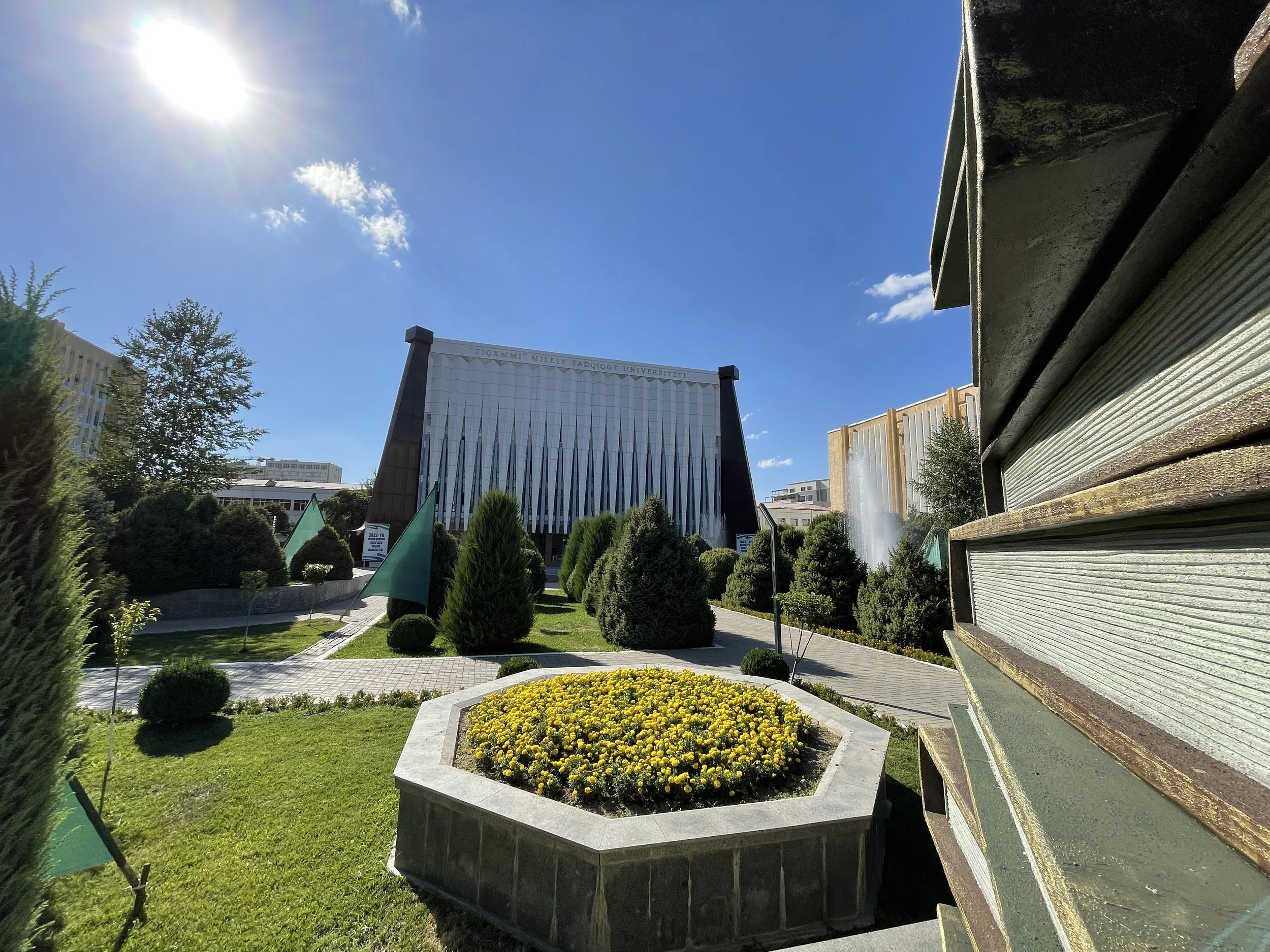
10–12 May 2027 • Tashkent, Uzbekistan • TIIAME National Research University
The 16th International Conference on Computational Heat and Mass Transfer (ICCHMT 2027) brings together researchers, academics, and industry professionals to exchange knowledge and discuss recent advances in computational heat and mass transfer, thermal-fluid sciences, and multiphysics modelling, with particular emphasis on innovative solutions for sustainable energy and engineering systems.
Sponsors
International Centre for Heat and Mass Transfer (ICHMT)
TIIAME National Research University
Abstract submission deadline:
January 30, 2027
Full paper submission deadline: March 8, 2027
Registration Fees:
Early Registration (€450, before 1 April 2027) and Regular Registration (€550, from 1 April 2027).
The registration fee includes attending all sessions, coffee and lunch breaks and the gala dinner.
Conference registration is not yet open. Please check the Submission and Registration page for updates.
Accommodation:
The following hotels are conveniently located near TIIAME National Research University, the ICCHMT 2027 conference venue:
InterContinental Tashkent by IHG — 5-star
Wyndham Tashkent — 4-star
City Palace Hotel Tashkent — 4-star
Participants may book directly with the hotels. Information on any special ICCHMT 2027 rates will be announced later if confirmed.
History
1999 - Cyprus
2001 - Rio De Janeiro, Brazil
2003 - Banff, Canada
2005 - Paris, France
2007 - Canmore, Canada
2009 - Guangzhou, China
2011 - Istanbul, Turkey
2015 - Istanbul, Turkey
2016 - Cracow, Poland
2017 - Seoul, Korea
2018 - Cracow, Poland
2019 - Rome, Italy
2021 - Paris, France
2023 - Düsseldorf, Germany
2025- Antalya, Turkey
Abstract Submission
Submit your abstract using the online submission form. Click Submit Abstract below to access the form.
Topics:
Computational Fluid Dynamics and Numerical Methods
Multiphase and Multiphysics Flows
Combustion and Reactive Flows
Artificial Intelligence, Machine Learning and Digital Twins in Thermal Engineering
Heat Exchangers, Heat Pipes and Heat-Transfer Enhancement
Thermal and Electrochemical Energy Storage
Renewable and Sustainable Energy Systems
Electronics, Data-Center and High-Heat-Flux Cooling
View the full list of conference themes on the Topics page.
Note: Although the conference primarily focuses on computational research, experimental studies are also welcome. Experimental validation of computational predictions is strongly encouraged where applicable.